For The Apple Farmer – Part I, start here…
The car with license plates from far away rolled to a stop just beyond the fence line, kicking up a faint cloud of dust that settled slowly on the dry earth. The team had been carrying the orchard through a punishing drought these past weeks, the soil cracked and the leaves hanging heavy with unspoken strain. The door opened, and out stepped a tall figure in a crisp button-down, sleeves rolled to the elbows, carrying a worn leather satchel that looked like it had seen more airports than orchards. He had the easy gait of someone who’d walked through plenty of fields, but his eyes scanned the rows with the quiet hunger of a man who knew value when he saw it.
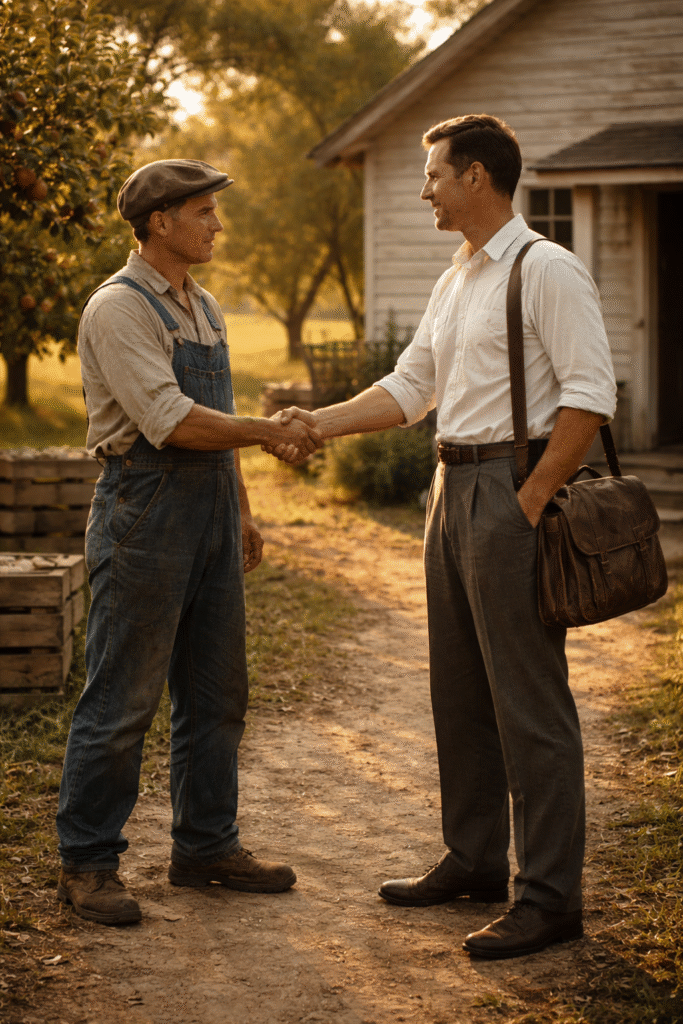
Paul was halfway down the path, wiping his hands on a rag, when the visitor called out.
“Paul Lee? Pleasure to meet you—I’ve heard a lot about you. Name’s John, but they call me Salsa.”
Paul nodded, a small smile creasing his face. “Heard you were coming. Welcome.”
Salsa didn’t waste time on pleasantries. “I heard really good things. Real good. What you and the team have pulled off here—it’s not just impressive. It’s rare. I’d be interested in learning more. If you’ve got the time.”
Paul studied him for a beat, then gestured toward the main house. “Stay with us. We’ve got room. Come on, I’ll show you around.”
That afternoon stretched into evening. Paul introduced Salsa to the team—quiet introductions in the shade of the young saplings, hands shaken over soil-stained palms. They weren’t just names; they were the heart of it. The ones who’d planted the first rows, the ones who’d stayed through the lean years. Salsa listened, asked questions that weren’t scripted, and by the time the sun dipped low, Paul was walking him end to end.
He showed him the graphs first, pinned up in the old barn they’d turned into a workshop. Lines that tracked the Natural Development Ratio—NDR, they called it—climbing north of 300%. “See here,” Paul said, tapping the paper. “That’s not just growth. That’s the trees telling us they’re happy. Roots deep, leaves strong. And through this drought? Not a single one lost. Not one.”
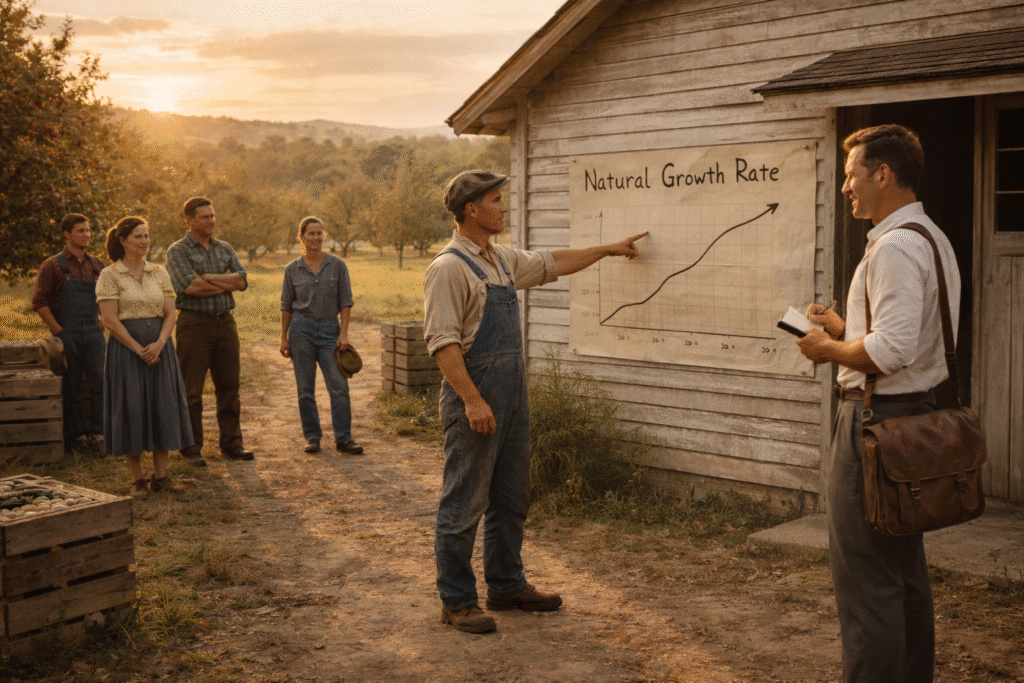
Salsa leaned in, tracing the curves with a finger. “How?”
“Care,” Paul said simply. “And giving them exactly what they want.”
Over dinner—simple fare, fresh from the garden and the last of the season’s apples—they talked numbers. Paul laid it out plain: costs held low because the team owned the work and the trees were planted right, morale high because they owned the vision. No one clocked out at five; they stayed because the orchard was theirs too. Salsa nodded through it all, jotting notes in a small book, his questions sharp but respectful.
The days that followed blurred into a rhythm. Salsa stayed on, sleeping in the spare room, rising with the crew at dawn. Paul showed him how they planted the new trees—careful, deliberate, each one its own way, but done fast, almost at the speed of machines, each team member knowing their role and handing off the work with minimal language. And then the breakthroughs: the different species they’d coaxed from the soil.
“We’ve got the ones producing now,” Paul said one morning, kneeling by a row of sturdy trunks with respectable amounts of fruit. “Malus Operarius. Solid producers. Reliable. But these—” He led Salsa to a fenced patch where saplings stood taller already, their leaves a deeper green, veins pulsing with promise. “Malus Vendratus. Early days, mind you. Way too soon to model anything solid. But the signs… they point to something big. Ten times the return, if the patterns hold.”
Salsa crouched low, running a hand along a young stem. “How?”
“The key is the cross,” Paul explained, his voice steady as he described it. “Vendratus and Operarius, bred in turns. Each generation faster than the last, but the quality? It doesn’t dip. It sharpens. And the Vendratus—when they mature, they cast this perfect shadow. Not too much, not too little. Saplings underneath grow quicker, sip less water, need less fuss. Just the right sun filtering through.”
Salsa straightened, eyes wide. “You’ve cracked it.”
By the end of the week, Salsa was on the phone. “I’m bringing the whole partnership down. They need to see this.”
Deep research followed—Salsa’s team digging into the records, the yields, the quiet testimonials from buyers who’d stuck. They told Paul that usually when they dug in, it got worse the deeper they went, but not this time; this time they liked what they saw more and more the more they dug. And then the offer came, typed out on heavy paper, slid across the table one crisp morning.
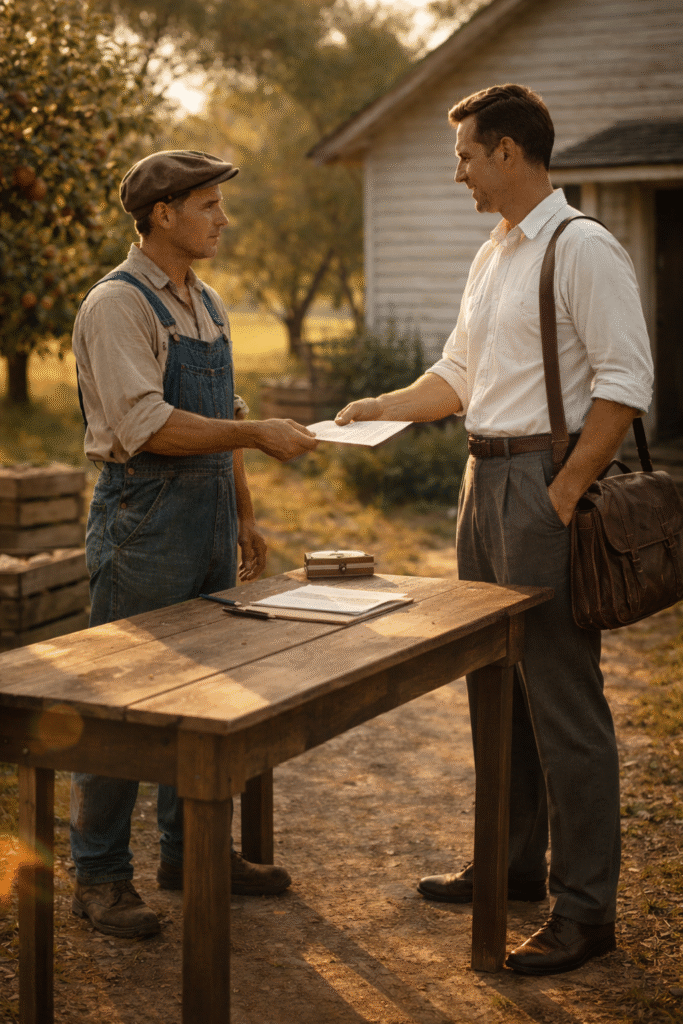
Paul read it slow, then set it down. “Appreciate it. Truly. But the value here… it’s not the fruit we’re picking now. Not even the ones still hanging. It’s the technique. The way we’ve taught these trees to grow bigger than anything else out there. The cross that makes each new batch stronger, quicker, without losing a bit of what makes them ours. And the promise of the Vendratus gene.”
Salsa leaned back, grinning despite himself. “I’m excited, Paul. Damn excited. But a hundred times revenue? That’s… a stretch. The best I can do is 75x.”
Paul chuckled softly. “I get it. I do. You could always wait and invest when it’s more proven at a smaller multiple, but the absolute valuation will be even higher.”
They stayed in touch after that. Salsa called every couple weeks, and Paul kept him posted—updates on the saplings, the first hints of bloom on the new lines. In no time, the Vendratus started producing. Yields ticked up, orders followed, and the numbers shifted. What had been a hundred-x multiple on revenue now sat at fifty-three—and it was just the first batch.
But Paul raised his ask by twenty-five percent. “Sixty-six times,” he told the team over breakfast. “Feels right.”
The call came a few days later. Salsa’s voice was warm but measured. “Paul, the models… they’re still saying you’re way above what we see in the market. Comfortable ratios, you know? This is solid, but… I can’t do it.”
Paul scratched his head, staring out at the orchard as the line went quiet. Seventy-five times had been fine four weeks ago. But now sixty-six times wasn’t? He shook it off with a smile, the kind that came easy after years of watching the seasons turn. There must be something here I’m just not aware of, he thought.
Over the next few months, as the seasons went, the orders kept rolling in—for both the Operarius and the Vendratus, steady as the rains that finally broke the drought. The team could now settle into their work, pouring every ounce into the soil, the trees, the quiet hum of the land. Paul tuned out the noise from the world beyond the hills—the stories swirling in the valley, the messages piling up from other investors. He turned them all away gently, no tours, no pitches. The orchard was for the work, not the show. Until one day…
To be continued…